Posts

5 Tips for ERP Success
Image
Looking for ERP Success? Here’s 5 Hacks to Help As the seasons start to change, it feels like the time for new beginnings and since there is really only one game in town, that means looking at your plans for digital change.  Do you have long-term ideas you need to get back on track? Do you have solutions to choose and partner to find? New products are appearing all the time and companies looking to take advantage of automating and streamlining processes might need to re-visit what the market has to offer. For many, that is going to involve looking at various ERP systems from different vendors and then conducting an evaluation about which solution is best. But many companies goes not with the price as a primary factor for evaluation but the functionality that is been matching the requirement of the business. Preparing for ERP Success No one can guarantee ERP success but there are several things you can and should do to prepare for implementation. 1. How ready are y...
4 Advantages of Optimizing Your ERP System

Image
In order to ensure and sustain efficiency and success, organizations must find defects. After defect evaluation, you should ensure that ERP systems work on these defects. In this article, we focus on the four advantages of optimizing ERP systems for your organization. To ensure productivity and success, every organization needs to recognize the flaws in the operations and take steps to address them. The potential deficiencies can be in client data security, compliance, customer data protection, supply chain management, and so on. After evaluating the flaws, organizations have to address the most pressing needs by building functionality on an external platform incorporated with the ERP systems. Here are the four advantages of optimizing ERP: Enhanced Functionality The functionality of the ERP system is distinct for each sector. Also, it cannot address every requirement of the business. As a result, organizations often integrate additional systems to augment the ERP. However,...

Moving ERP to Cloud ‘Will Benefit Business’

Image
The reality today is that enterprise applications are well on their way to being cloud based. We’ve seen it with simple workloads such as HR and payroll, travel and expense management. In fact, a recent report predicts that the public cloud services market in the Mena region will grow by 18.3 per cent in 2020 to $879.3 million. More specifically, the cloud application services (SaaS) market is forecasted to grow by a staggering 207 per cent from $166.1 million in 2015 to $509.8 million in 2021. So, what are the benefits of cloud-based ERP solutions? Below are eight reasons why moving your ERP system to the cloud will benefit your business and support business growth. 1. Freedom of Choice Put quite simply, not all cloud ERP systems are created equal. Specifically, very few ERP vendors like us respect your right to choose the deployment model that is most appropriate for you, and revise that decision down the road as your business grows or technical needs change. Y...

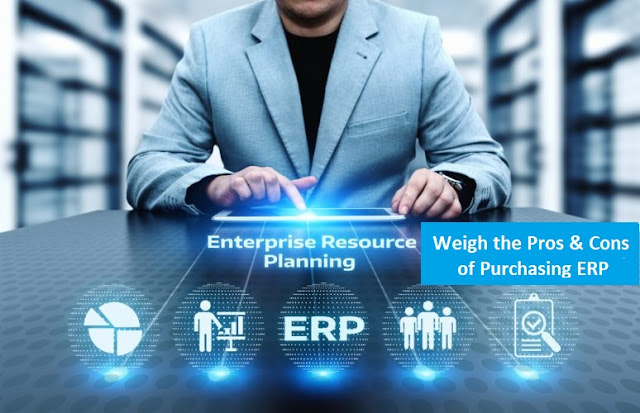
How to Weigh the Pros and Cons of Purchasing ERP

Image
These are typical worries that our team of experts has heard in regards to ERP systems. A substantial amount of organizations’ complaints and questions about the worth of an ERP system have validity: ERP solutions are expensive, difficult to select, and can be tricky to implement. On the other hand, there’s little doubt that ERP solutions are necessary for process manufacturers that want to compete on a national or global scale. It is almost impossible for manufacturers needing comprehensive lot traceability, financials, and extensive quality control requirements to operate without an integrated system. Horizon’s ERP solution provides a complete system from beginning sales order entry through the manufacturing and accounting process. ERP fully integrates the critical needs of batch processing: forward and backward lot tracking, inventory control, order entry, manufacturing, and bill of materials maintenance. Unfortunately, many companies get caught in a quandary. Should they for...

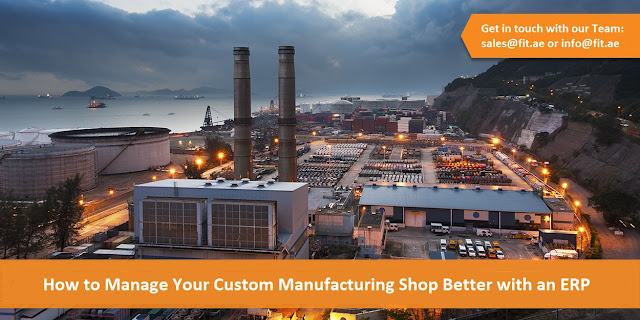
How to Manage Your Custom Manufacturing Shop Better with an ERP

Image
Managing a custom manufacturing plant isn’t easy you’ve got a busy shop floor to run, engineering and customer changes to keep up with, jobs to complete, and rapidly approaching deadlines that you need to meet. This is why an ERP is an essential tool for small- to mid-sized custom manufacturers. Horizon’s ERP is truly the workhorse of the manufacturing industry and can help you realize your goals and grow your business. Custom manufacturers specifically need an ERP, like Horizon ERP, that has been developed and built exclusively for them: A manufacturing-specific ERP will include the features and functionalities that a custom manufacturer needs to manage inventory levels, efficiently schedule a shop floor, and complete more jobs, but will also include features to help manage the sales process, customer relationships, as well as reporting, finances and accounting. A good manufacturing-specific ERP will help you manage every aspect of your shop, simplify your manufacturing pro...

5 Signs It’s Time for SMEs to Automate

Image
Automation can help businesses of all sizes to become more efficient and in turn, benefit from increased productivity and customer satisfaction. Seems quite straightforward, doesn’t it? Surprisingly, according to a Survey, a mere  25%  of small-sized companies are in fact, automated. The decision to go the digital route is often delayed because of the time and costly resources needed to develop and implement a new system, and only then, train employees on how to use it. Then again, waiting too long to automate your organization can and does have consequences. Production workflow, for example, can be affected, even slowed to a halt or by holding on to manual processes. But what’s affected most of all is the customer experience that depends on timely development, production and distribution processes. When these can no longer scale up as the business grows, the customer is the hardest hit. Here are the five bottlenecks that can let small and medium-sized businesses kn...

Why Intelligent Cloud ERP Delivers Increased Value

Image
Agility is the name of the game for businesses looking to respond to threats and opportunities in their markets. Intelligent  cloud ERP  provides the core technology that enables organizations to build the agile foundations they need to enter new markets and become disruptors in their industries. Intelligent cloud ERP is different from legacy ERP software in its ability to embed automation into an organization’s day to day processes. It comes equipped with technologies, such as predictive analytics and conversational user experience design that enable it to learn, memorize and execute the task on behalf of the user a big step forward from simply alerting the user that something must be done. This intelligence provides the digital platform on which organizations can better leverage data for more powerful insights, integrate end to end processes and incorporate external sources of information into their day to day decision making. Too often organizations wait patientl...